
Buying & trust / Identifying 304

How to Identify Real 304 Stainless Steel

A field-test buyer's guide to telling genuine 304 from carbon steel, look-alike 201 and mislabelled stock. Each test is explained honestly — what it detects, how to run it, what the result means, and where it fails. The short version: field tests are screening only; the reliable proof is a mill test certificate plus a reputable supplier.
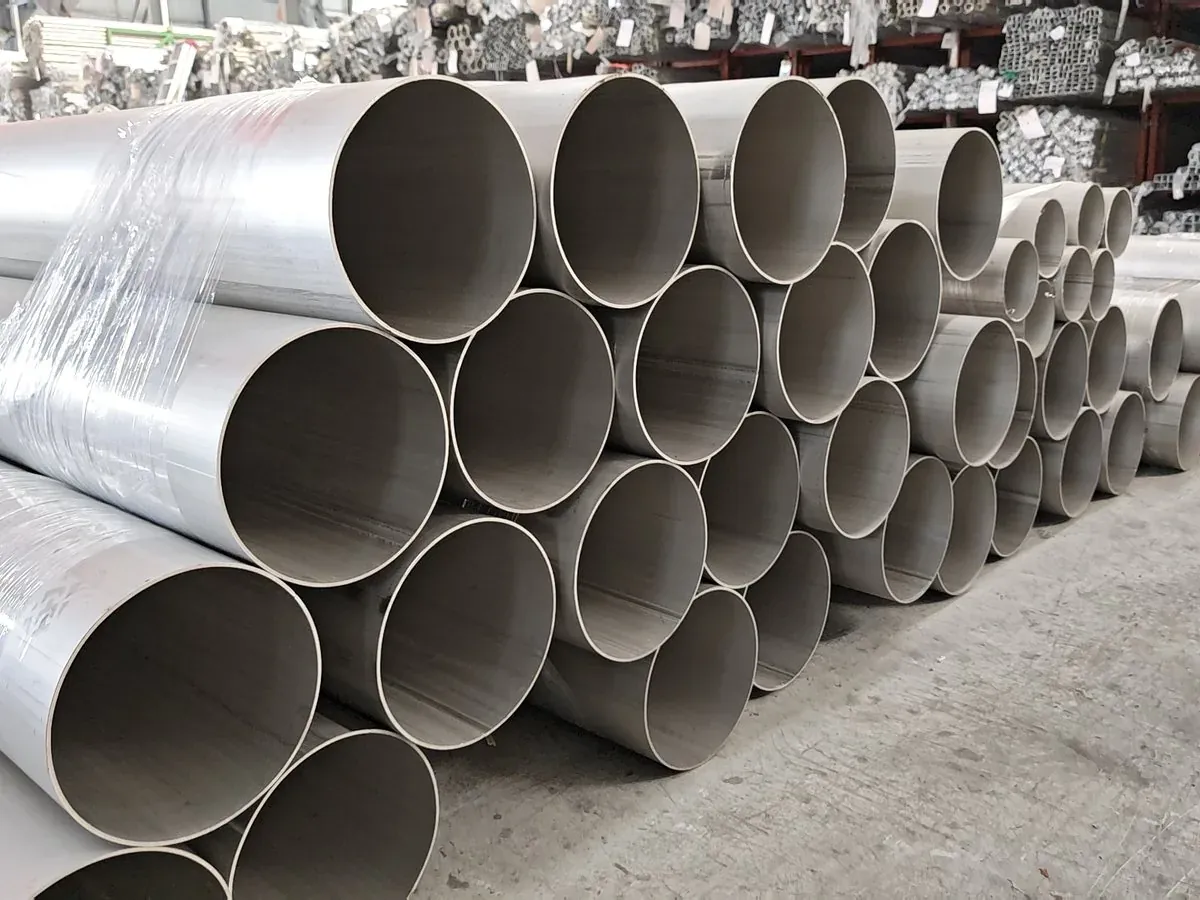
Close-up of 304 stainless steel industrial pipe ends showing bright mill surface and uniform wall thickness
Start here

Why "is it stainless?" and "is it 304?" are two different questions

Most quick tests answer only the first question — they separate stainless from plain carbon steel. Telling 304 apart from 201 (a cheaper, higher-manganese, lower-nickel austenitic grade that looks identical) is much harder, because the two share the same bright, non-magnetic appearance. The single most common substitution in the trade is 201 sold as 304, and no magnet or eyeball test reliably catches it. Read each method below for what it can and cannot prove.

304 (typical)
~18% chromium, ~8% nickel, low manganese (≤2%), no molybdenum. Austenitic, non-magnetic when annealed.
201 (typical)
~16–18% chromium, only ~3.5–5.5% nickel, high manganese (~5.5–7.5%), no molybdenum. Also austenitic and non-magnetic — the look-alike.
316 (typical)
~16–18% chromium, ~10–14% nickel, plus ~2–3% molybdenum for chloride resistance. The Mo is what most spot kits actually detect.
Carbon / low-alloy steel
Little or no chromium; rusts readily. Easiest to screen out with copper sulfate or nitric acid.

If you only remember one thing: a magnet does not separate 201 from 304, and a handheld analyser cannot read carbon. Match the test to the question you are actually asking. For the underlying compositions, see our stainless steel grades reference.

Field test 1

The magnet test

The most popular and most misunderstood test. Useful, but only for ruling out certain things — never for confirming 304.

What it detects
Whether the steel is ferromagnetic. Ferritic and martensitic grades (e.g. 430, 410) are magnetic; austenitic grades (304, 316, 201) are mostly non-magnetic in the annealed state.
How to run it
Hold a strong magnet to a clean, flat area away from welds and cut edges. Note whether it grips firmly, weakly, or not at all.
What a result means
Strong pull suggests a ferritic/martensitic or carbon steel. Little to no pull is consistent with an austenitic grade — but that includes 304, 316 and 201.
Limitations
Cold-worked, deep-drawn or welded 304 can become slightly magnetic locally, and 201 is also essentially non-magnetic when annealed (it too can pick up slight magnetism after cold work) — so a "non-magnetic" result cannot reliably tell 201 from 304. The magnet is qualitative and affected by magnet strength, thickness, finish and operator judgement.
Bottom line: a magnet helps you rule out 400-series and carbon steel, but it does not distinguish 201 from 304. Anyone claiming "it's non-magnetic, so it's 304" is mistaken. Ask ZAIHUI about grade verification →
Field test 2

Stainless steel test solutions (spot reagents)

Chemical "identifying solutions" — sometimes sold as a "304 vs 201 test reagent" — are the most practical chemical screen for separating austenitic grades, when used correctly.

Molybdenum (Mo) reagent
Detects molybdenum, which is present in 316/316L (~2–3%) but essentially absent in both 304 and 201. It tells 316 from 304 — it does not separate 304 from 201, because neither contains Mo.
Manganese / "low-nickel" reagent
This is the test that targets 201. A manganese or low-nickel identifying reagent reacts with high-manganese, low-nickel steel. A characteristic colour change (e.g. a red/purple-red reaction within about a minute or two) indicates the elevated manganese and low nickel typical of 201; 304 reacts little or shows a much weaker colour (often near-colourless or pale yellow on kit charts).
How to run it
Clean the surface, apply the reagent (often with a small electric current for electrolytic kits) per the manufacturer's instructions, then read the colour against the kit's reference within the stated time.
Limitations
Results are qualitative and depend on a clean surface, correct technique and a fresh reagent. The colour confirms a family (high-Mn 200-series or contains-Mo), not an exact heat. Reagents are corrosive — wear gloves and eye protection and follow the SDS.
Spot reagents are the most accessible way to flag suspected 201, but they screen rather than certify. Treat a positive manganese reaction as a reason to demand the certificate, not as a final grade report. Request a certified grade from ZAIHUI →
Field test 3

The copper sulfate test

The quickest way to separate any stainless steel from plain carbon steel — but blind to grade.

What it detects
Free iron at the surface. A 5–10% copper sulfate solution plates a reddish copper film onto plain carbon/low-alloy steel; properly passive stainless steel shows no copper deposit.
How to run it
Clean a small spot to bare metal, apply a drop of 5–10% copper sulfate solution and watch for a few minutes.
What a result means
A pink-to-copper deposit means free iron is present — carbon steel, or stainless that is contaminated/not passive. No deposit is consistent with stainless steel.
Limitations
It cannot tell 304 from 201 or 316 — all of them pass. It is also not recommended for low-chromium martensitic 400-series steels (under ~16% Cr), which can give a false copper deposit regardless of contamination. It is a stainless-vs-not screen and a passivation check, nothing more.
Field test 4 — handle with care

The nitric acid test

A classic sorting test based on stainless steel's resistance to concentrated nitric acid. Effective at separating stainless from carbon steel, but genuinely hazardous — treat it as a professional method.

What it detects
Resistance to concentrated nitric acid. Stainless steel resists strong (≈65–70%) nitric acid and stays bright; carbon steel reacts, corroding and giving off a pungent brown nitrogen-oxide fume.
How to run it
A trained operator places a drop of concentrated nitric acid on a small cleaned area in a well-ventilated area, observes the reaction, then neutralises and rinses thoroughly.
What a result means
No reaction and a clear acid drop indicate stainless steel; rapid attack with brown fume indicates carbon/low-alloy steel.
Limitations
Like copper sulfate, it separates stainless from non-stainless but does not distinguish 304 from 201 or 316. It is destructive to the test spot.
Safety: concentrated nitric acid is highly corrosive and toxic, and the fumes are dangerous. Use full PPE (chemical gloves, goggles/face shield, apron), work only in a fume hood or well-ventilated area, never inhale the brown fume, keep neutralising agents to hand and follow the nitric acid SDS. If you are not trained to handle strong acids, do not run this test — ask the supplier for a certificate or lab result instead.
Field test 5

The spark (grinding) test

Indicative only — useful to a trained eye for sorting scrap families, not for confirming a grade.

What it detects
Carbon content, read from the spark stream when the metal is touched to a grinding wheel.
How to run it
Lightly grind a clean edge in a darkened area and watch the spark colour, length and bursts.
What a result means
Austenitic stainless (304/316) gives a short, dull reddish-orange stream with few or no carbon "bursts"; carbon steel throws a long, bright, bushy stream full of star-like bursts.
Limitations
Highly subjective and operator-dependent. It can hint at stainless vs carbon steel but cannot separate 304 from 201 (both are low-carbon austenitics with similar spark patterns). Treat it as a rough sort, never as proof.
Definitive methods

Instrument and laboratory verification

When you need to prove the grade rather than screen it, you move from kitchen-table tests to instruments — and ultimately to documentation.

Handheld XRF analyser
A portable X-ray fluorescence "gun" reads the alloy's elemental percentages in seconds and is the standard for positive material identification (PMI). It cleanly separates 201, 304 and 316 by chromium, nickel, manganese and molybdenum. Key limit: XRF cannot measure carbon (carbon is far below its light-element detection range), so it cannot by itself distinguish 304 from 304L (or 316 from 316L), which differ only in carbon. Surface condition and coatings can also affect light-element readings.
OES / spark spectrometry
Optical emission spectrometry (lab or mobile) burns a tiny spot and reads the full composition including carbon, nitrogen, phosphorus and sulfur. It is the method that confirms low-carbon "L" grades and is the reference for full grade verification.
Independent laboratory analysis
An accredited lab can run OES/chemical analysis and report results against the relevant ASTM/EN/JIS chemistry — the most defensible third-party proof for a disputed lot.
Mill test certificate (MTC)
For a buyer, the most practical "definitive" step is the document: a mill certificate reports the actual heat chemistry and mechanical properties with traceability. Cross-check it against the grade's standard chemistry and, where stakes are high, verify with XRF/OES.
An EN 10204 3.1 inspection certificate is issued and signed by the manufacturer's own QA function (independent of production) and reports specific test results for the actual lot; a 3.2 adds an independent third party who witnesses and counter-signs the tests. A 2.2 test report confirms compliance and reports test results from non-specific (generic) production rather than the exact lot. For grade confirmation, ask for at least a 3.1. See how to vet a Chinese stainless supplier →
At a glance

Which test answers which question?

Use this to pick the right test — and to see, plainly, that only instruments and certificates can confirm 304 over 201.

Comparison of common stainless steel identification methods. "Reliability" describes how dependably the method confirms grade, not merely stainless-vs-not.
TestWhat it detectsCan it tell 304 from 201?Reliability
MagnetFerromagnetism (rules out ferritic/martensitic & carbon steel)No — both are non-magneticLow (screening only)
Molybdenum spot reagentPresence of Mo (flags 316)No — neither has MoLow for 304/201; useful for 316
Manganese / low-Ni reagentHigh manganese, low nickel (flags 201)Indicative yes — colour reactionModerate (screening, qualitative)
Copper sulfateFree iron (stainless vs carbon steel)NoLow for grade; good stainless screen
Nitric acidAcid resistance (stainless vs carbon steel)NoLow for grade; hazardous
Spark (grinding)Carbon content / familyNoLow (subjective)
Handheld XRFElemental % (Cr, Ni, Mn, Mo …)YesHigh (but no carbon → can't split 304/304L)
OES / lab spectrometryFull composition incl. carbonYesVery high (reference method)
MTC (EN 10204 3.1/3.2)Documented heat chemistry & traceabilityYesHigh — best practical buyer proof
The honest conclusion

Field tests screen; certificates and a reputable mill confirm

Quick tests have their place — they cost almost nothing and catch obvious carbon-steel or 201 substitutions before money changes hands. But every one of them is a screen, and the most common fraud (201 sold as 304) is exactly the one a magnet and most spot kits cannot settle on their own.

  • Use field tests to flag problems early: magnet to rule out 400-series/carbon steel, copper sulfate or nitric acid to rule out carbon steel, a manganese reagent to flag suspected 201.
  • Demand the mill test certificate — ideally EN 10204 3.1 — and check the reported chemistry against the standard for 304 (e.g. ASTM A312/A213 or your applicable spec).
  • For high-stakes or disputed lots, verify with handheld XRF (for the alloying elements) or send a sample for independent OES/lab analysis (which also reads carbon for L-grades).
  • Above all, buy from a manufacturer that traces every heat and is willing to put the grade in writing.
From ZAIHUI

How we make 304 verifiable — and sell 201 honestly

ZAIHUI is a manufacturer-direct stainless steel mill in Foshan, producing since 2006 across 130+ production lines. The way we keep grade honest is documentation and traceability, not a sales claim.

Material test certificates
We supply mill test certificates reporting the actual heat chemistry and mechanical properties, so you can cross-check the grade rather than take our word for it.
Grades, clearly labelled
201, 304, 304L, 321, 316 and 316L — each sold as what it is. 201 is a legitimate, cost-effective grade; we offer it openly and never pass it off as 304.
Standards
GB, ASTM/ASME, JIS, DIN — or to your drawing, so the certificate is checked against a defined chemistry.
Range
Welded or seamless pipe, OD Φ6–325 mm, wall 0.3–10 mm, in BA/2B/brushed/polished/pickled/mirror finishes.
Verification welcome
We support customer PMI/XRF on receipt and independent lab checks — accurate grade is in everyone's interest.
Contact
info@zhsstube.com / +86 158 1565 5163
Want certified 304 you can verify on arrival? Ask for the mill test certificate with your quote, and run XRF on receipt — we expect it. See our 304 industrial pipe →
Common questions

FAQ

Can a magnet tell real 304 from fake or from 201?

No. A magnet only separates magnetic steels (ferritic/martensitic grades like 430 and 410, and carbon steel) from non-magnetic austenitic grades. Both 304 and 201 are austenitic and largely non-magnetic when annealed, so a "non-magnetic" result is consistent with either one. Cold-worked or welded material can also pick up slight magnetism locally. The magnet test is a useful screen to rule out 400-series and carbon steel, but it cannot confirm 304 or distinguish it from 201.

What is the most reliable way to confirm a grade is really 304?

Documentation plus instruments. The most practical buyer proof is the mill test certificate (ideally EN 10204 3.1, which reports lot-specific chemistry signed by the manufacturer's QA, or 3.2 with third-party witnessing), checked against the standard chemistry for 304. For verification, a handheld XRF analyser reads the alloying elements (Cr, Ni, Mn, Mo) in seconds, and an independent OES/lab analysis confirms the full composition including carbon — the only way to separate 304 from low-carbon 304L. Field tests alone are screening, not confirmation.

Why can't a handheld XRF tell 304 from 304L?

304 and 304L have essentially the same chromium, nickel and manganese; they differ mainly in carbon content (304L is the low-carbon version). Handheld XRF cannot measure carbon — carbon sits far below the light-element range any handheld unit can read — so it cannot split 304 from 304L. XRF is excellent for separating 201, 304 and 316 by their heavier alloying elements, but confirming an "L" grade requires OES or laboratory chemical analysis, which read carbon directly.

Is it safe to do the nitric acid or reagent tests myself?

Only with proper training and precautions. Concentrated nitric acid is highly corrosive and toxic and gives off dangerous brown fumes; spot reagents are also corrosive. If you run them, use full PPE (chemical gloves, eye/face protection, apron), work in a fume hood or well-ventilated area, never inhale the fume, keep neutralising agents available and follow each product's safety data sheet. If you are not trained to handle strong acids, skip these and instead ask the supplier for a mill test certificate or send a sample to an accredited lab.

Want 304 you can verify?

Ask ZAIHUI for a quote with the mill test certificate, run XRF on receipt, and check the chemistry against the standard. Honest grade, every heat documented.

Request a quote
Request a quote