
A quote path that feels prepared, not salesy
We treat every RFQ as an engineering conversation. Tell us what the pipe has to do, and we work backwards to grade, size, finish, standard and logistics — so the quote you receive is one you can actually rely on for your project.
Three steps from your application to a firm quote.
No pressure, no guesswork. We move in order — application first, standard second, commercial and logistics last — so nothing important is assumed.
Start with the application
Before any price, we ask what the pipe is for: a handrail, a process line carrying fluid, a structural frame, a marine fitting, an architectural facade. The application drives everything that follows — corrosion environment, mechanical load, hygiene needs and which grade and finish actually make sense. A clear application lets us steer you away from over-specifying (paying for 316 where 304 is fine) or under-specifying (choosing 201 where chlorides will attack it).
Confirm the standard
Next we align on the standard you build to — GB, ASTM/ASME, JIS, DIN, or your own drawing. Standards govern dimensional tolerances, wall-thickness schedules, acceptance criteria and the inspection regime, so locking this early prevents rework later. If you supply a drawing, we quote to it directly; if you are unsure, we map your application to the standard your market and inspectors expect.
Quote with logistics
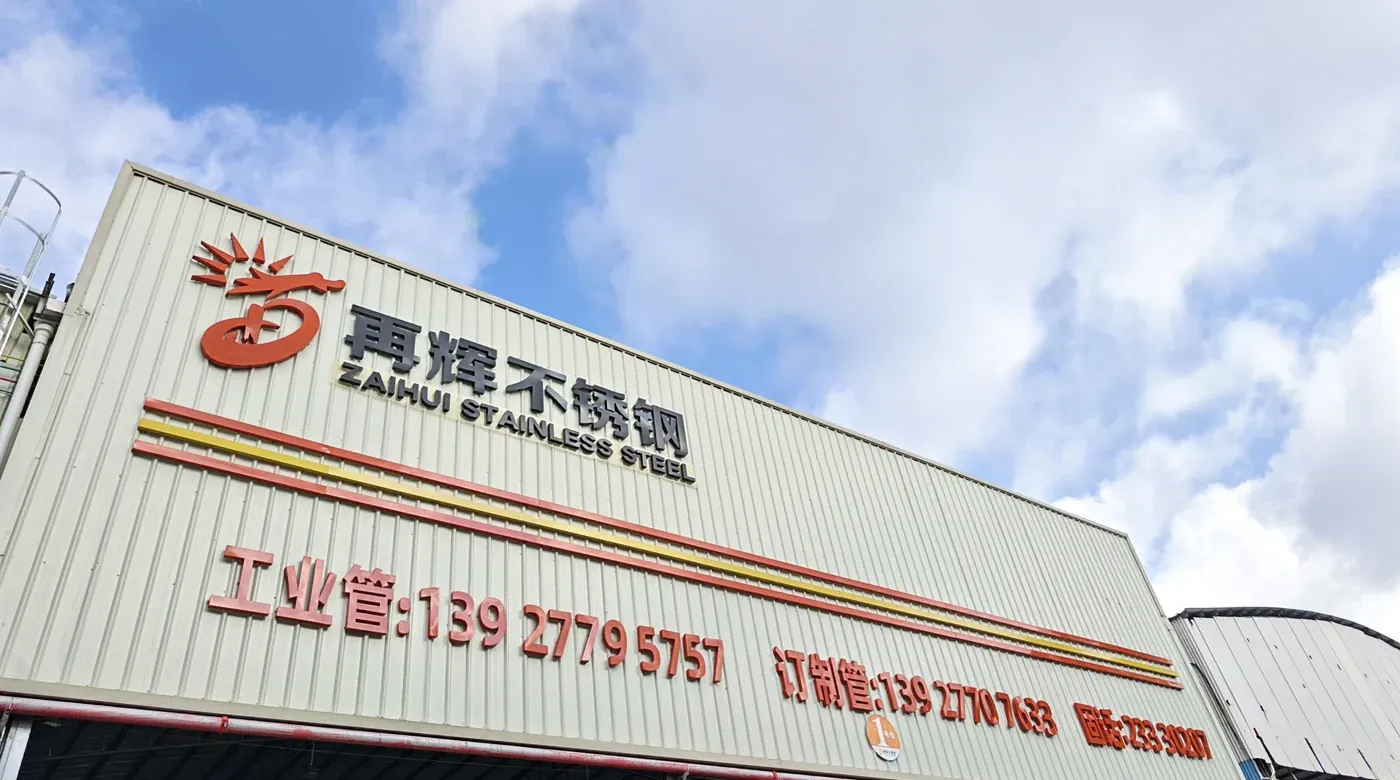
Only once grade, size, finish and standard are agreed do we put numbers together — including surface finish, inspection scope, export-ready packing and your delivery location. As a manufacturer shipping worldwide from Foshan since 2006, we fold realistic packing and shipping into the quote rather than surprising you afterward. You receive a quote you can hand to procurement with confidence.
What to send for a fast, accurate quote.
The more of these you can share, the tighter and quicker the quote. If a line is still open, send what you have — we will help you fill the rest.
How we pick the grade with you.
Grade choice is a balance of corrosion environment, fabrication and budget. Here is the qualitative guidance we use as a starting point — your RFQ confirms the right call.
Budget & decorative
A low-nickel, high-manganese grade positioned for cost-sensitive, indoor and decorative work where heavy corrosion exposure is not a factor — trim, furniture, signage and interior fittings. The economical choice when the environment is mild and appearance matters more than chemical resistance.
Balanced & general-purpose
The workhorse grade, offering a strong balance of corrosion resistance and weldability for general industrial use, construction, architecture and equipment. For most applications that are not exposed to chlorides or aggressive chemistry, 304 (or low-carbon 304L for welded assemblies) is the dependable default.
Chloride & chemical service
A molybdenum-bearing grade with markedly better resistance in chloride, chemical, marine and water-treatment environments. Choose 316 (or low-carbon 316L for welded fabrications) where salt, process media or coastal exposure would attack lighter grades.
Related products & reading
Buyer FAQ
304 vs 316 — which grade do I need?
304 suits handrails, construction and general commercial or industrial use. Step up to 316 or 316L for marine, coastal, chemical and water-treatment service, where chloride and corrosion resistance matter more.
What is 201 best for, and when should I avoid it?
201 is our budget grade for indoor decoration, furniture and general fabrication. Avoid it in humid, acidic, alkaline, salt-spray, food-contact or pressure service — use 304 or 316 there.
Which standards do you supply to?
GB, ASTM/ASME, JIS and DIN, or to your own drawings. Confirm the target standard in your RFQ so we quote against the right execution standard.
What pipe shapes and sheet forms do you supply?
Round, square, rectangular, decorative and threaded pipe, plus stainless steel sheet and plate.
Do you supply internationally?
Yes — we export worldwide through 28 direct sales branches and 500+ distributors, with export-ready packing and inspection support.
Ready to start your RFQ?
Send the application and whatever specs you have. We reply within one business day with a clear, prepared quote.