
How to verify a Chinese stainless steel supplier
Buying stainless steel from China can be excellent value — or an expensive mistake when 201 is shipped as 304, or a trading company quotes you a price it cannot actually control. This is a plain-English checklist for separating real mills from middlemen, demanding the right documents, and proving what you ordered is what arrives. ZAIHUI is a manufacturer-direct mill in Foshan, so we have a stake in buyers knowing how to check — including how to check us.
Manufacturer or trading company — and why it matters
Many Chinese suppliers present themselves as "manufacturers" when they are actually trading companies sourcing from third-party mills. Traders are not automatically a problem — some are excellent — but you should know which you are dealing with, because it changes price, traceability and how much control sits behind your order.
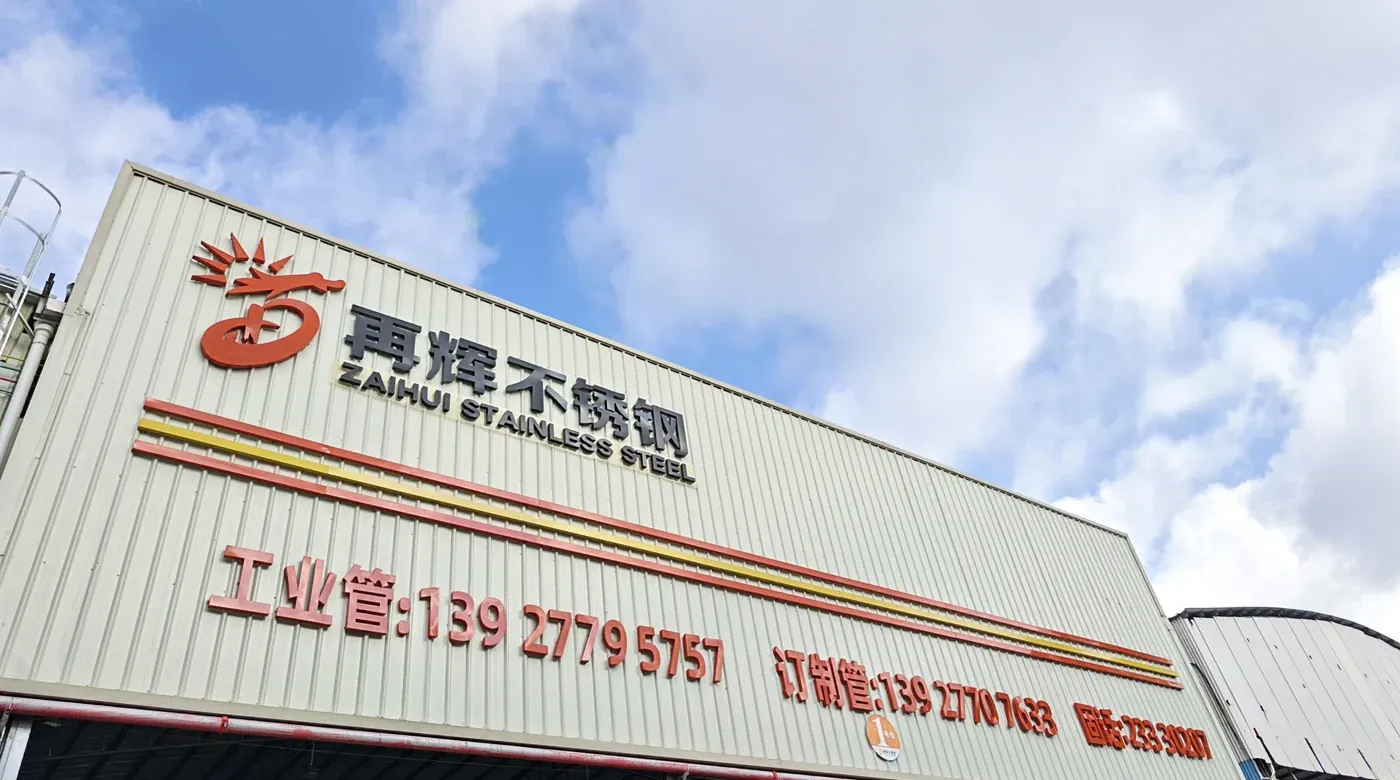
Ask direct questions and listen for specific, checkable answers: How many production lines do you run, and of what type? What is the exact factory address (a works, not an office)? Can I see a live video tour or arrange a factory audit? Which grades and sizes do you actually roll in-house versus buy in? A genuine mill answers without hesitation. ZAIHUI, for context, runs 130+ production lines in Foshan and has done since 2006 — see about ZAIHUI and our production & QA process.
Documents to demand — and what each one proves
Paperwork is where most verification happens. Insist on these before you pay a deposit, and read them, don't just collect them.
For stainless in corrosive service, you can sanity-check an MTC yourself: confirm chromium, nickel and (for 316) molybdenum fall inside the ASTM A240 limits for the grade, and that manganese is low. A nickel figure around 3.5–5.5% paired with manganese up around 5.5–7.5% is the chemistry of 201, not 304 — 304 carries roughly 8–10.5% nickel with manganese held to 2% maximum, so the label saying "304" should match the numbers. Our companion guide on how to identify real 304 stainless walks through the field and lab checks, and the grades reference hub lists the nominal ranges.
EN 10204 inspection certificate types
EN 10204:2004 defines four document types. The jump from 2.x to 3.x is the important one: 2.1 and 2.2 are non-specific (general production data or a bare declaration), while 3.1 and 3.2 are specific — the results come from the actual batch being shipped to you. For traceable stainless, ask for a 3.1 as standard, and 3.2 when a project demands independent witnessing.
| Type | What it is | Who issues / validates it |
|---|---|---|
| 2.1 | Declaration of compliance with the order, with no test results included (non-specific). | The manufacturer, stating the goods meet the specification — no data, no signature from a tester. |
| 2.2 | Test report with results, but from routine production testing — not necessarily your specific heat (non-specific). | The manufacturer, based on its own non-specific inspection procedures. |
| 3.1 | Inspection certificate with test results from the actual delivered batch (specific inspection). | The manufacturer's authorised inspection representative, who must be independent of the manufacturing department (e.g. QA/test house). |
| 3.2 | Like 3.1, but the results are additionally witnessed and countersigned by an independent third party (specific inspection). | An independent inspector (e.g. a third-party body or the buyer's authorised agent) together with the manufacturer's inspection department. |
Verification steps that actually de-risk an order
Documents establish intent; these steps confirm reality. Use as many as the order value justifies.
- Independent third-party inspection. Bodies such as SGS, Bureau Veritas (BV) or TÜV can audit the factory, witness production and inspect goods before shipment, giving you an unbiased report rather than the seller's word.
- Factory audit or live video tour. A genuine mill will walk you (or an inspector) through the lines on camera or in person. Match what you see against the claimed production capacity and address.
- Sample order plus independent lab test. Order a small quantity, then have a neutral lab confirm the grade — composition by spectrometer (OES is the most reliable; portable XRF also reads the chromium, nickel and manganese that separate 201 from 304) is decisive. This is the cleanest way to catch 201-sold-as-304 before a bulk order.
- Heat-number traceability. Check that the heat number stamped or stencilled on the physical material matches the heat number printed on the MTC. If they don't match — or the material carries no heat mark at all — the certificate may not belong to your steel.
- Registry and identity check. Confirm the registered Chinese company name on the official enterprise registry, and verify it is consistent across the website, quotation, contract, invoice and bank details.
Red flags — when to slow down or walk away
None of these alone is proof of fraud, but each warrants questions. Two or three together is a strong signal to verify hard before paying.
- A price far below the market. The 304-to-201 cost gap is large; a "304" quote that undercuts everyone is the classic setup for 201 or off-spec material sold as the real grade. If it looks too good to be true, ask for the MTC and a lab-tested sample.
- No mill test certificate, or vague stalling when you ask for one. A real producer issues an MTC as a matter of course.
- Refusal to allow a sample, inspection or audit. Legitimate suppliers expect verification on meaningful orders.
- The address is an office, not a works. A registered trading address with no plant behind it suggests a middleman, not a mill.
- Inconsistent company name across platforms — website, marketplace listing, contract, invoice and bank account don't all match the registered legal entity.
Where ZAIHUI fits
We wrote this guide to be useful even if you never buy from us — but for the record, here is how we line up against the checks above. We sell 201 openly and label it as 201; we never pass it off as 304.
FAQ
How can I tell if a Chinese supplier is a real manufacturer or a trading company?
Ask for the exact factory address, number and type of production lines, and a live video tour or audit, then verify the registered company name on China's official enterprise registry and check it matches the bank account and invoices. A real mill answers specifics readily, specialises in a narrow product range, and can tie your order to a specific heat; a trader tends to list a very broad catalogue and is a step removed from where the steel is actually rolled.
What is a mill test certificate, and which EN 10204 type should I ask for?
A mill test certificate (MTC) states the chemistry and mechanical properties of your steel and ties them to a heat number. Under EN 10204:2004, types 2.1 and 2.2 are non-specific (a declaration, or general production data), while 3.1 and 3.2 are specific to your actual batch. Ask for a 3.1 as standard — validated by the manufacturer's inspection representative who is independent of production — and a 3.2 when you need an independent third party to witness and countersign the results.
How do I avoid being sold 201 stainless as 304?
Be wary of a "304" price that is far below the market, since the cost gap between 304 and 201 is large and tempts substitution. Demand the MTC and confirm the chemistry sits inside the ASTM A240 limits for 304 — roughly 18–20% chromium and 8–10.5% nickel with manganese held to 2% maximum. By contrast, 201 runs lower nickel (about 3.5–5.5%) and much higher manganese (about 5.5–7.5%), so those numbers betray a 201 sold under a 304 label. The decisive check is a sample order tested for composition by an independent lab using a spectrometer.
Is third-party inspection worth it, and who does it?
For any meaningful order, yes. Independent inspectors such as SGS, Bureau Veritas (BV) or TÜV can audit the factory, witness production and inspect goods before shipment, giving you an unbiased report instead of relying on the seller's claims. Pairing a pre-shipment inspection with a lab-tested sample and a heat-number check against the MTC removes most of the risk in a cross-border stainless steel purchase.
Verify, then specify
Put a real mill to the test
Send your specification and we will respond with a quote, the certification you need and the option of a sample and factory tour — manufacturer-direct from Foshan.